

In May 1978, The Clean, a local Dunedin band composed of brothers Hamish and David Kilgour, and bassist and future Bats guitarist and singer, Robert Scott, played their debut show at the Beneficiaries Hall on the corner of Hanover and Filleul streets. It was only on the day of the show that they asked their friend Peter Gutteridge to take on the singing duties. Reflecting on the show, David said, ‘I was white as a ghost before we went on stage. I was terrified; the Enemy (the band they were opening for) had to virtually push us on stage.’ His brother Hamish admitted that they had one practice as a foursome at the back of the hall before they played, and he was ‘terrified that people were going to throw bottles’, so he built a ‘wall with the drums’ to protect himself. Nonetheless, they leaned into their fears and belief in their music, and played. It was the start of something special, and a musical project that would endure for four decades.
The Clean were part of a musical and cultural movement, the Dunedin Sound, which was and is indelibly linked with the city. The roots and inspiration for bands like The Clean, The Chills, and The Straitjacket Fits were the punk and post-punk movements in the UK and US, but morphed into something unique amidst the isolation and beauty of the Deep South. The Dunedin Sound was lauded internationally in alternative music circles, and endures as an influence on artists today.
In his book, The Clean: In the Dream Life You Need a Rubber Soul, Richard Langston comments that Dunedin was a city that valued the arts from the outset, drawing attention to one of the first civic acts: the erection of a statue of the Scottish poet Robbie Burns in the town centre in 1887. James K Baxter was also a Dunedinite, alongside the ‘wilder and less conventional’ musicians that emerged and flourished here during the 1980s. Many of these bands were amongst the thirteen that were invited to perform at the first Otago Festival of the Arts that was held in 2000.
You can trace a direct line from those interests and priorities of the city’s early civic leaders and people to the proponents of the Dunedin Sound in the 1980s and 1990s. You can trace a line to young people in our city today, including those at our school, who have a passion for and thrive in the arts and cultural activities at our college. I certainly see this when I watch Deaf Racoon, one of our senior student bands, play. Their music and approach feel imbued with the vibe and ethos of the Dunedin Sound movement.
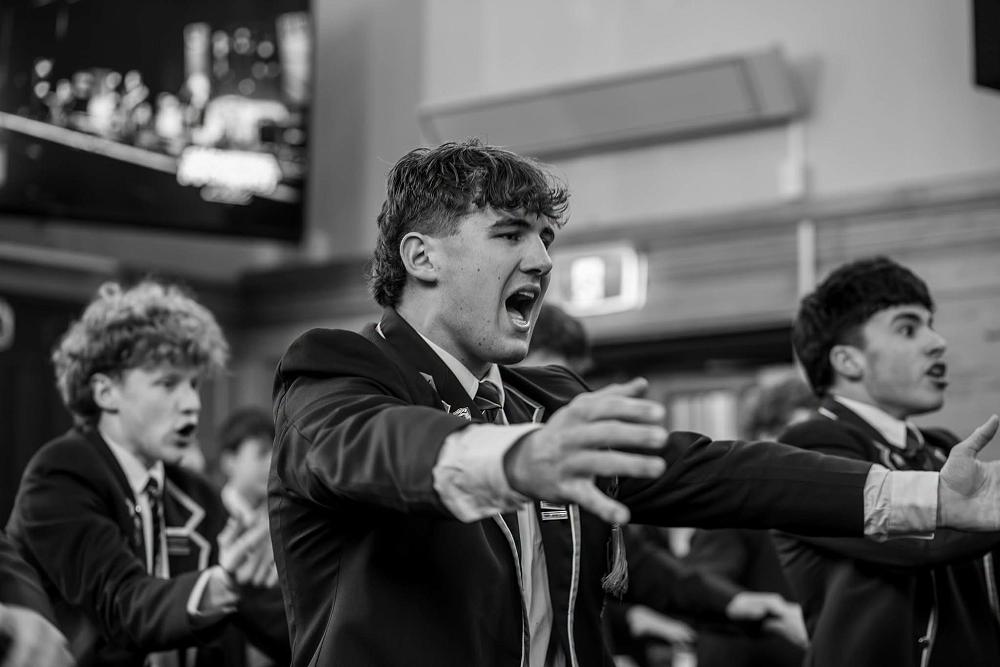
On Monday night, we held our annual Arts and Culture Celebration in the chapel. This is when we recognise the incredible achievements of our students in those spheres. We had plenty to celebrate, including national-level performances at RockQuest and Ngā Manu Kōrero, and second place in the Otago Regional Showquest. We also recognised the efforts and passion of representatives in a host of other activities. These included Ōtepōti Improvisation, 48-hour film-making, piping, jazz band, debating, chamber music, kapa haka, and BandQuest.
The presentation of Arts and Cultural Blues rounded out what was a special event, shared by the large number of parents and whānau in attendance. To qualify for a Blue, a student must demonstrate Manaakitanga and Leadership within or beyond the school community, including a combination of mentorship, assistance, and contribution. The students presented with the Blue represent the embodiment of our school’s values and the uplifting of community.
As a Principal, I was humbled by the large number of students we recognised on Monday night, and again at assembly on Wednesday. We talk about the goal of the rounded individual, as envisioned by John McGlashan. This endures as a key tenet of who we are and what we do. The events of Monday night represented our young people taking up the opportunities before them and flourishing.
It is also important to acknowledge the support of staff. Their passion cascades to our young people, as does their infectious energy. Here, I’m grateful to Pennie Hunt, Kimberley Fridd, Olivia Leonard, Whaea Lizzie Clark, and Matua Dave Beazley
At the Distinguished Old Collegians’ assembly earlier this year, David Cottle urged our boys to ‘find your passion and stick with it.’ I thought about that as I watched our students ascend the stage, and when I was privileged to be shaking hands and presenting the Blues. These boys had found their passion and, through hard work, commitment, drive, curiosity, and by supporting and encouraging each other, had grown and thrived in their chosen craft. They had found their passion and stuck with it. This was humbling and inspiring at the same time.
There is a whakataukī we shared with the school this year. It was recently applied to the wall of a busy stairwell area as a reminder to the students of our culture of effort and perseverance: 100% Every Day. You can’t be what you can’t see.
Whāia e koe te iti kahurangi ki te tūohu koe, me he maunga teitei
Pursue excellence – should you stumble, let it be to a lofty mountain
This whakataukī is about perseverance and endurance, and the unrelenting way we reach goals. It applies to all we do in our daily lives at John McGlashan, as we take up opportunities and realise potential. It had an added resonance this week, though, as we recognised the themes of effort, passion, and commitment that underpinned the achievements in the arts and cultural spheres. It’s this spirit of unrelenting effort and pursuit of potential that makes our McGlashan arts community so vibrant.
Andrew Grounds, our Arts and Cultural Prefect, delivered the Last Word at assembly on Wednesday. While I share a few thoughts and words in assembly each week, I’m usually outshone by the prefect delivering the Last Word, which I actually enjoy and appreciate immensely. I will conclude with Andrew’s words that express profoundly who we are and what we value. He commented that our celebration of arts and culture went beyond achievement to the recognition of how these students ‘help make our school a place where others feel inspired to express themselves too.’
 Open Event Registration - Interested in enrolling?
 Employment opportunities - click if you're interested in working at McGlashan.