

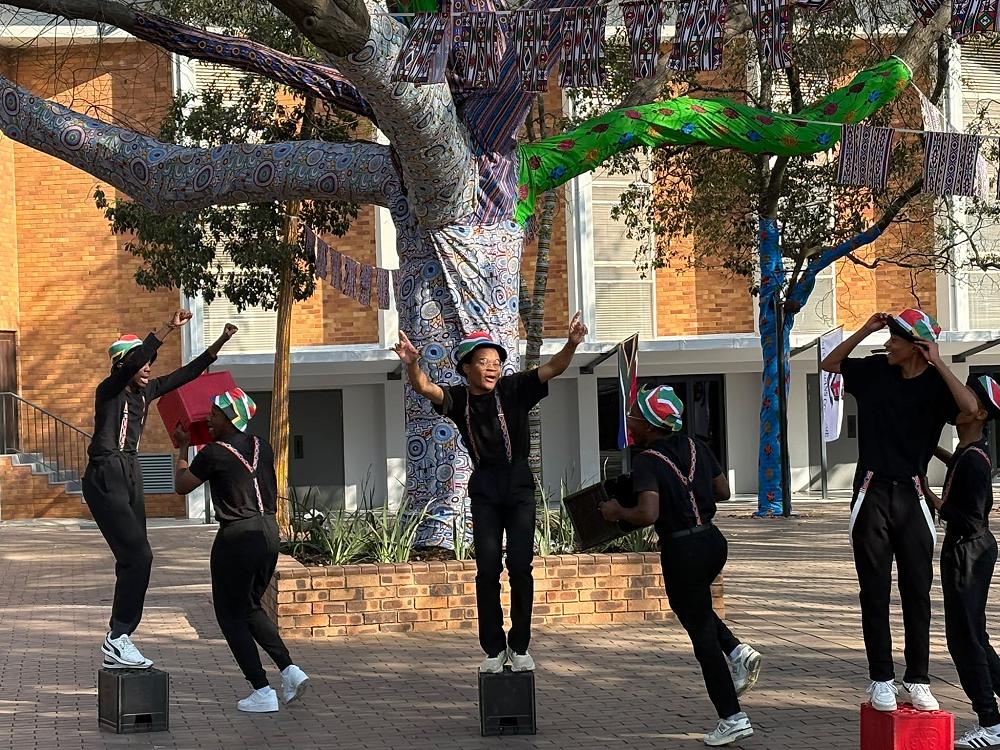
Ubuntu is a southern African concept best summarised by the phrase I am because we are. It's a belief in the universal bond of sharing that connects humanity. It has its roots in Zulu culture and its sense of togetherness, the root of community.
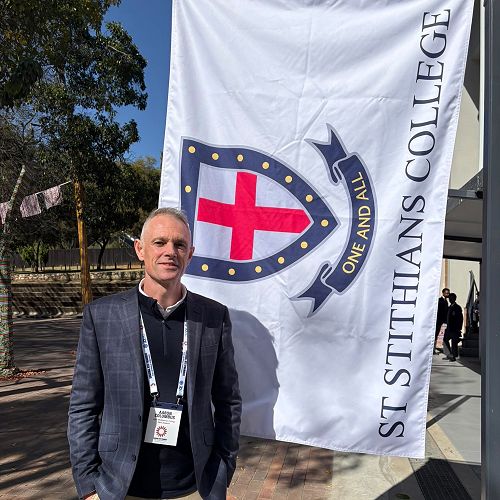
This is a way of thinking about boys’ education that was a key theme at this year’s International Boys’ Schools’ Coalition (IBSC) Annual Conference, being hosted in Johannesburg by St Stithians College. I’ve been lucky enough to be here attending and presenting at the conference this week.
The IBSC comprises over 300 member schools from twenty countries around the world. Two years ago, I attended the annual event at Harrow School in London and presented a workshop on change leadership. In 2023, I attended my first annual conference, which was hosted by Westlake Boys’ High School in Auckland. The IBSC connects educators to support boys’ learning experiences, researches teaching practices, and serves as a vehicle for championing boys' schools.
The location of this year’s conference has added local resonance. Fifty years ago, on June 16 1976, the student-led uprising erupted in Soweto township. This was a key moment in the anti-Apartheid movement and its eventual disestablishment in the 1990s. The event’s anniversary was reflected by one of the keynote speakers, Seth Sandile Mazibuko. Seth was the youngest leader of the South African Students’ Organisation that planned and led the student march on 16 June 1976. At the age of sixteen, he was arrested and imprisoned on Robben Island for seven years following the uprising.
Seth spoke about the moment he arrived at Robben Island and met Nelson Mandela, who said to him to focus on ‘education, education, education’, as they had a country to build when they were released. This influenced the journey he embarked on during his imprisonment, and in the years that followed.
St Stithians was a beautiful location for the conference. David Du Toit is the Head of the boys’ college, which was established in January 1953. Two of the founders died before it was opened, so like our school, it was the result of vision and perseverance. In his foreword for the conference programme, David said this about why we had gathered together in Johannesburg:
‘We are here because we care deeply about the young people we educate, about our boys and the futures they wish to live and the impact they want to have. In a world of uncertainty about boys and men, we choose to work in spaces that invest in research and intentional practice to ensure flourishing young men leave our schools to make a world of difference. We are crafting positive messaging about young men, with young men. We love our boys and see what is wonderful in them.’
Whether hailing from boys’ schools in the UK, India, the USA, Australia, South Africa, or Dunedin, this message resonated with the core work we are doing as educators in boys’ schools. It’s about supporting young people to flourish, and the aroha that guides us towards this goal, alongside the inherent and infinite potential we see in our boys.
David’s words provided a reminder about why our schools exist. His reference to investment in research is something reflected in the topic of my workshop presentation: Building a Research-Invested Culture in a Secondary School Context. Here, I talked about the journey towards establishing the Armour Institute at Wellington College, making it sustainable in the weeks leading up to my departure for Dunedin, and starting again with the Gilray Institute at John McGlashan.
I have been thinking a lot about character, values, and belonging, which is where I mostly focused my workshop attendance. This was rich contextual learning, and has me thinking about how it might apply at John McGlashan. We never adopt or implement wholesale what we engage with and learn. It’s in the translation and figuring out what might work and how it can be applied in our unique context.
It was a privilege to be here in Johannesburg this week. I enjoyed reconnecting with colleagues from past conferences, making new friends and professional connections, talking about boys’ education for four days, and learning about the amazing work being done by colleagues around the world. It was also a privilege to share the good work we are doing at John McGlashan College, and to ensure our name and brand are visible amongst the international boys’ schools’ network.
I’m excited to return to school with new ideas and to think about how we can use these to support our change journey. It’s key to go to the well and engage with the inspiring practices and innovations of others, if we’re to realise the vision for our young people.
The South African Anglican bishop, Desmond Tutu, said this about the essence of ubuntu: ‘We think of ourselves far too frequently as just individuals, separated from one another, whereas you are connected and what you do affects the whole world. When you do well, it spreads out; it is for the whole of humanity.’ This applies to schools, too. That’s what I like to think about as an educator; how essential it is that we come together to share what we are doing and learn from one another, for the betterment of all young people.
Dr Aaron Columbus
Principal | Tumuaki
 Open Event Registration - Interested in enrolling?
 Employment opportunities - click if you're interested in working at McGlashan.