
Recently, we were fortunate to welcome Nilesh Naran from Wellington College to work with both staff and senior students around learner habits, the science of learning, and practical strategies that help young people learn more effectively.
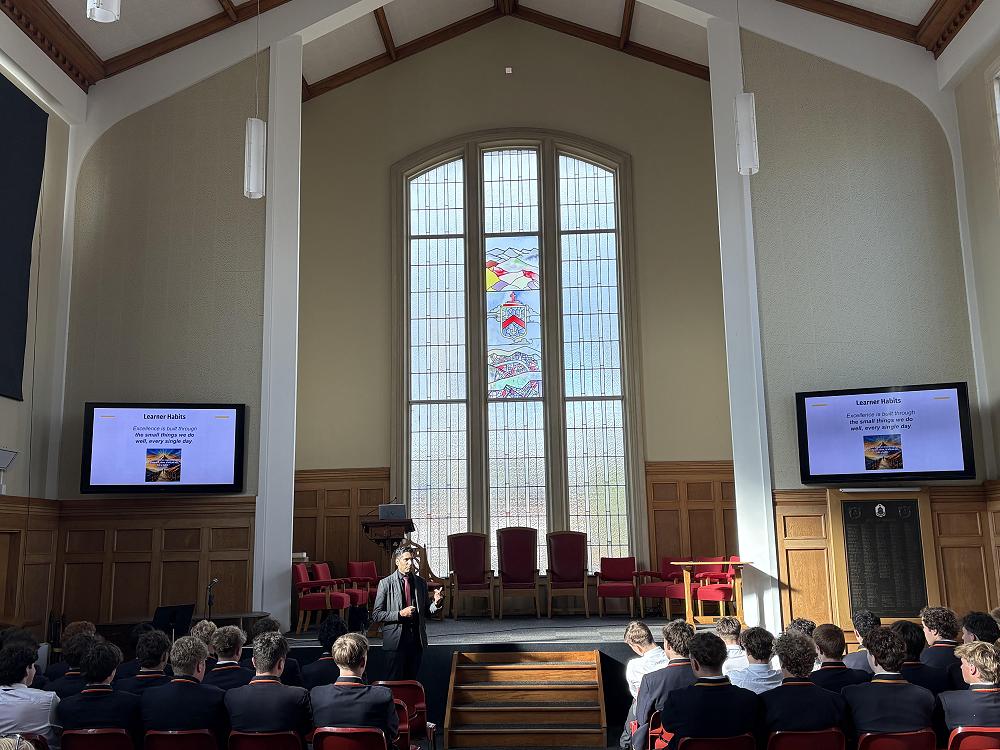
Nilesh’s sessions focused on a simple but powerful idea: excellence is not something achieved occasionally, but something built through the small habits and routines we practise consistently over time. Drawing on current research into memory, focus, and cognitive science, he challenged students and staff to think carefully about what effective learning actually looks like.
A major focus of the sessions was helping students understand how the brain learns best. Students explored evidence-based strategies such as retrieval practice, spaced repetition, interleaving, and dual coding, approaches shown through research to improve long-term understanding and memory retention. Rather than simply rereading notes or highlighting information, students were encouraged to actively test themselves, revisit learning over time, and embrace what researchers call “desirable difficulty” or “productive struggle.”
Nilesh also spoke about the importance of habits in learning success. Students reflected on the routines and behaviours that support achievement, wellbeing, and organisation. Practical strategies such as the “2-minute rule,” habit stacking, using flashcards effectively, feedback logs, and managing distractions were discussed as ways students can build positive and sustainable study habits.
One particularly valuable aspect of the visit was hearing directly from students about the learning habits they have already begun developing. Some spoke about using focus timers to stay on task, creating study routines with “no zero days,” keeping productivity logbooks, and discussing learning with parents at home to strengthen understanding and memory.
Staff sessions explored how these ideas can continue to be embedded into classroom practice across the school. Discussions centred around focus, distraction, memory formation, device use, and creating classroom conditions that best support learning for teenagers. Staff also reflected on how consistent learner habits and routines can help students become more independent, resilient, and successful learners over time.
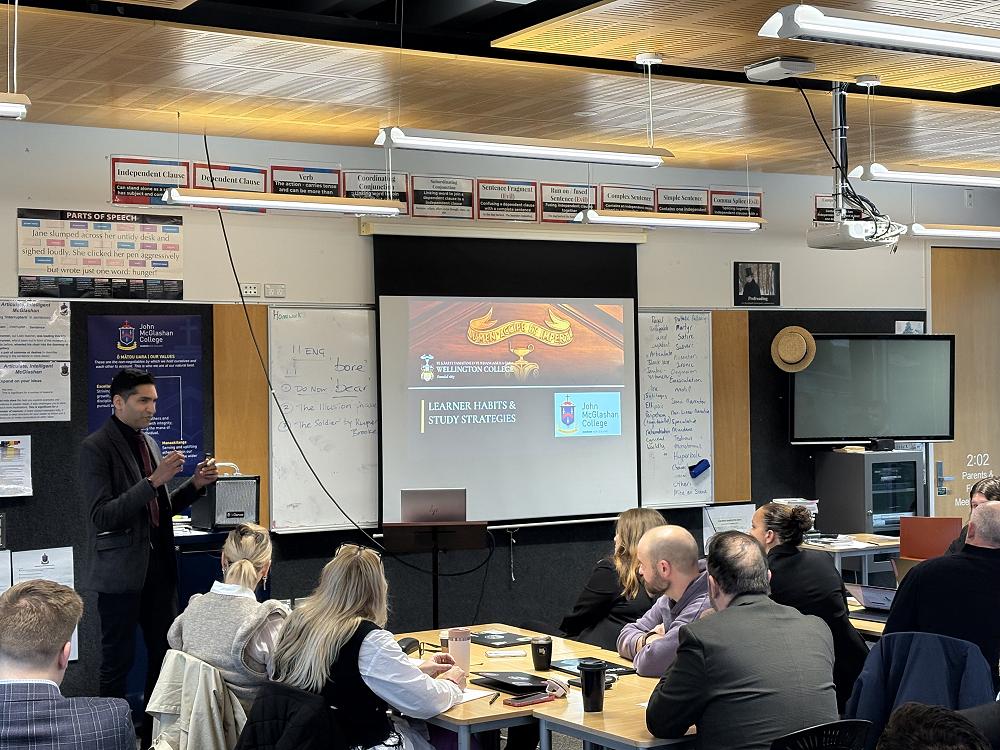
The visit strongly aligned with our ongoing work around learner habits and helping boys understand not only what to learn, but how to learn effectively. We are grateful to Nilesh for sharing his expertise and for challenging both students and staff to think deeply about the habits that underpin success at school and beyond.
Nigel Hunter
Deputy Principal
 Open Event Registration - Interested in enrolling?
 Employment opportunities - click if you're interested in working at McGlashan.