
My holiday job at secondary school and university was at Strongman Mine on the West Coast of the South Island. We moved to Greymouth from the Teviot Valley when I was in Year 9, as Dad was starting a new job at the coal mine. Mum was raised on the West Coast, so there was a connection for us to the region. Miners' sons (it was gendered in the early 90s) could work at the mine when they turned fifteen. At that time, the underground coal seams of Strongman No. 1 were still being worked. This is the same mine that experienced an explosion in 1967, which claimed the lives of 19 men. I started there with my best friend Taane in the Easter holidays of Year 11. His dad, Flipper, was also working at the mine.
By law, we were not allowed to work underground until we were 18, so our duties were mostly confined to the outside areas of the mine site, although we did spend time underground on occasion. I continued the job in my holidays when I left Greymouth for Christchurch and university. It was at this time that I was able to work underground, now in Strongman No. 2. Shifts were 12 hours, so in winter you entered the mine in the dark at the start of the day, and exited the mine in the dark at the end of the day.
To say I enjoyed the job would be a stretch. Although Taane had left school during Year 13 to work full-time at the mine, and there was some expectation I would do the same, I knew it wasn’t for me. I had been inspired by my Classical Studies teacher to embark on a different journey, so the juxtaposition of studying Classics and History at Canterbury during term time and returning to the rigid masculine expectations of the mining environment was not lost on me.
I was grateful to have the job. It paid well, supported my studies, and contributed to the work ethic I have maintained since. Even so, I always looked forward to the end of the holidays and returning to my studies in Christchurch, and to my open-minded and diverse friends, where I felt I was a much more authentic version of myself.
Conversely, I felt uncomfortable conforming to certain expectations of me as a young man and person at the mine. This is not to say the people at the mine were not good people. They were great, but I never felt connected to them in a tribal sense, nor did I feel a sense of belonging. My worldview was evolving, and what I valued and knew was diverging.
What I mostly struggled with was the idea that I needed to fit a certain box, or conform to a code of restrictive unwritten rules. Looking back, I’m proud that I was true to myself and my values, and comfortable breaking away on a different path that ultimately led me here to John McGlashan College. Here, I feel that sense of belonging deeply. I mined these themes (pun intended) at assembly on Wednesday.
I tend to admire musicians who forge their own path, defy externally imposed expectations of who they should be and what they should create. Kurt Vile is one of the artists for me, and I shared with the school his answer to an interview question about the influences on his creative process. To which he answered, ‘I’m not trying to anything, I’m just trying to be myself.’ That is such an important message for our young people, which reflects our value of Respect and honouring ourselves with integrity. To me, that means being your true authentic self, and equally, the best version of yourself. That can be a challenge for a young person, and I would argue it is quite marked for a teenage boy in 2026.
As I discussed in last week’s forward, there are myriad expectations that boys perceive are applied to them, and that they need to be. What we talked about at assembly was the reality that there is no box that they need to conform to or fit into. They just need to be themselves. There is courage in maintaining that, whatever the pressures and external influences might be.
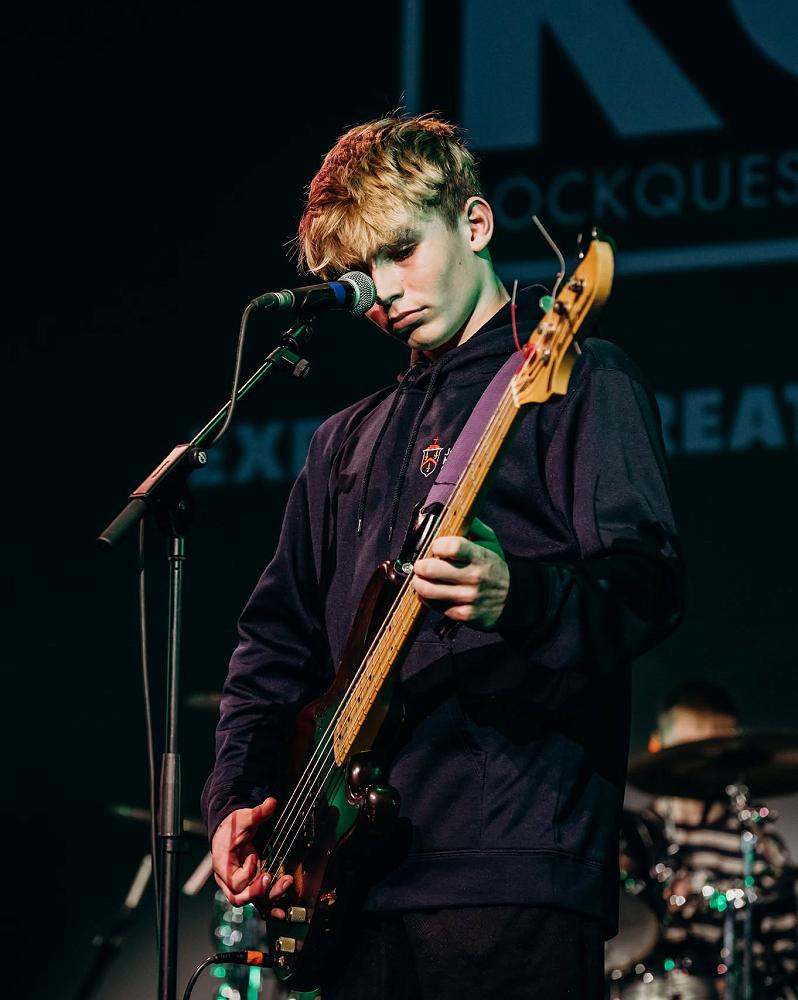
One of my favourite parts of this job is being out and about seeing our boys participate in the array of co-curricular activities they take up, whether it be arts, cultural, or sporting. I love being on the sidelines at fields and courts around the city, or in the audience seeing our boys on stage. The classroom is and will always be core business. It’s why we exist, but alongside this, we see our young people thriving in the co-curricular spaces. This is where I see a certain side of them. They are often part of a team or maybe a troupe, working alongside one another, living our values, developing resilience and perseverance, and most importantly, having fun. What I also see, though, is them being themselves in those moments. I saw that last weekend when I watched junior basketball games on Friday night and rugby games on Saturday morning, and saw that in spades in the Show Quest performance a month ago.
I reflected on the power of the Show Quest theme, ‘Boys will be…’, at the assembly, specifically the statements that rotated across the screen at the end of the performance: Boys will be kind, boys will be different, boys will be empathetic, boys will be vulnerable, boys will be themselves, etc. Each of those statements resonates with the work we are doing to strengthen our culture, which supports our boys breaking the restrictive, rigid template of what it means to be a young man. I acknowledged to them in the assembly that being a young person in 2026 must be hard. We shouldn’t assume we know and understand their experiences. This was the driver behind the survey the Year 9-13s completed last week, for which the boys were thanked for their honesty and their trust in sharing their voices and experiences.
I also shared a version of this quote with them, from Andrew Reiner’s excellent book, Better Boys Better Men: ‘We owe this to boys - to replace our reflexive suspicion and judgement on them with fully engaged listening that offers them our curiosity, presence, and compassion.’
This quote was shared with staff during our Professional Learning and Development session on Wednesday, as it frames our collective approach to character formation. It’s simple, but compelling and non-negotiable. It’s our value of Respect brought to life: honouring others and ourselves with integrity; upholding the mana of every individual.
While growing up in the 90s seemed like a simpler time, we do have a better culture of openness and leaning into societal and cultural problems. I don’t recall articulating my discomfort with the disconnect and absence of belonging I felt working at the mine. That wasn’t the norm, at least in my cultural context. This is the new norm at our school and in our community. We don’t shy away from hard conversations. Our young people are too important. They need to know there is no box to fit. That construct is redundant. A non-negotiable of our values is to be your true and authentic self. The salient words of Andrew Reiner are pertinent here: ‘I’m pushing for masculinity to throw off its shackles and to become a far more dynamic, generative, and yup, nurturing identity. Who’s with me?’
Dr Aaron Columbus
Principal | Tumuaki
 Open Event Registration - Interested in enrolling?
 Employment opportunities - click if you're interested in working at McGlashan.