

On 12 February 1918, our college was formally opened when Headmaster Arthur Butchers, dressed in gown and trencher, called the roll for the first time. This followed speeches by both Butchers and the President of the Board of Governors, the Reverend Graham Balfour, prayers and a Bible reading. The college was declared open by Margaret McGlashan, daughter of John McGlashan, during a 30-minute break in the building. Construction works were not completed in time for opening day, but our forbears were keen to set to the good work of realising John McGlashan’s vision.
This momentous occasion had been in the making for 70 years, since John McGlashan’s germ of an idea for a Presbyterian boys’ school. It was two of his daughters, Margaret and Agnes, who in April 1917 gifted the family’s land and homestead to the Presbyterian Church to build the school in memory of their father. The intervening months between gift and formal opening had been marked by a flurry of activity, including day and boarding enrolments from the city and across Otago and Southland.
Ten boarders and eleven day boys were welcomed to the school on that first morning, aged seven to eighteen years. By the end of the first year, the school’s roll had increased to seventeen boarders and twenty day boys, and by February 1919, this had increased to forty boarders and forty-two day pupils. Thirty-five of the students were under twelve. In the first school prospectus, parents were urged to enrol their boys as ‘young as possible, as much more satisfactory results can eventually be obtained when we are able to secure continuity in their education from its earliest stages.’
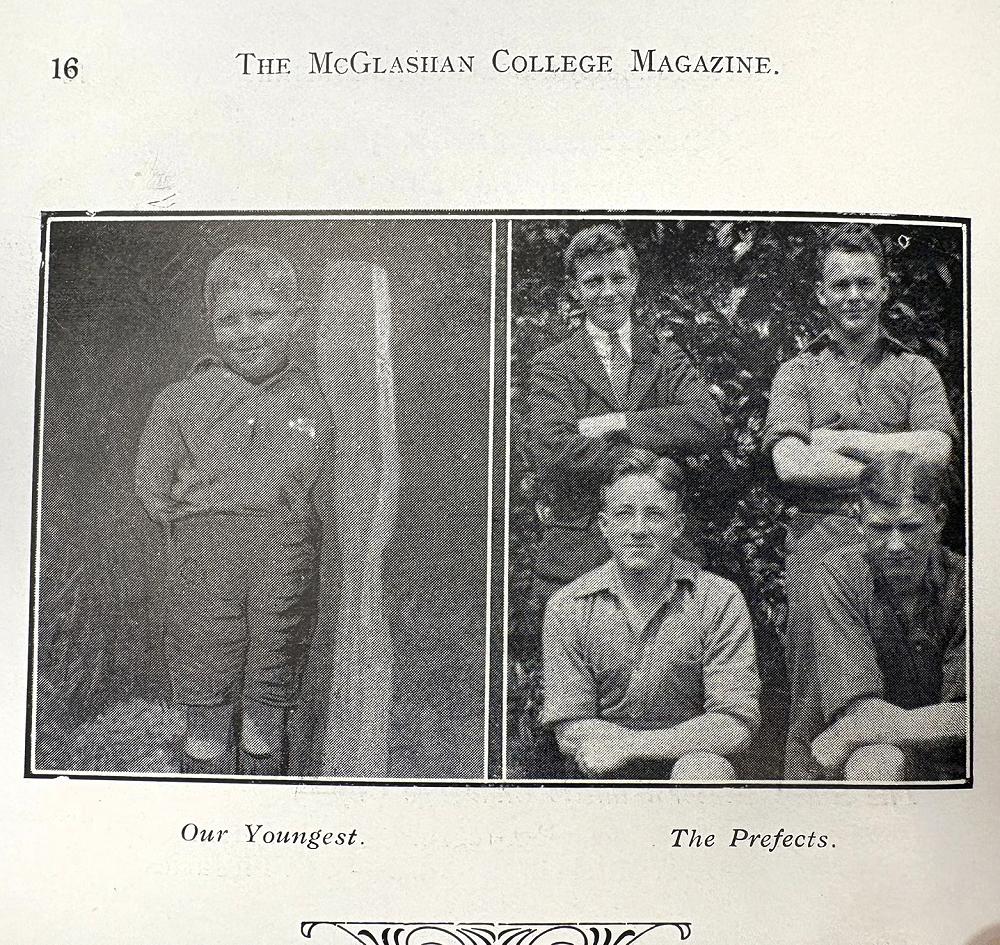
Fast forward to 1922. This was Arthur Butchers’ last year as Headmaster and the fifth anniversary of our college. In the Boarders’ Notes of the McGlashan College Magazine, comment was made that all boarders were ‘assembled’ in Balmacewen House, from ‘babies to seniors’. The head boarding student jested that the seniors had to mind their p’s and q’s, for ‘if we don’t take care what we say in company, someone’s granny gets to know about it.’ He went on to explain that ‘Macduff, being the youngest, receives the most attention; we do up his boots at the risk of our lives, finding it sometimes necessary to supply lollies.’ A photo in the magazine editorial shows the spread of ages at the school, from the youngest to the Prefects. There is a sense in the magazine and others from this period that there was a strong connection across the different age groups at our school.
This is something I see daily at John McGlashan, but especially when it comes to co-curricular activities. I mentioned this in an editorial a few weeks back when I talked about the Waitaki exchange and how the senior students were supporting the juniors during their matches, and vice versa. I see these connections whenever I attend sporting fixtures, whatever the code, and also in the arts performance space. It often manifests in senior students coaching and supporting the junior students, which is an authentic reflection of our value of Manaakitanga: serving and uplifting others, within our school and wider community.
This week, we hosted the Year 7 and 8s from Southland Boys’ High School for a winter exchange. This had not occurred for some time, and it was an excellent opportunity for our junior students to experience a traditional type exchange and to represent their college in this arena. I enjoyed making my way around the various fixtures - football, chess, rugby, hockey, and basketball - and seeing our young people competing, supporting each other, and enjoying themselves. Senior students were dispersed across the matches as coaches and referees.
This is when you see another side of the belonging fostered in our school, and where character is nurtured. It’s where the involvement of our senior students has real power: the privilege and responsibility they have as role models to the younger students. I’m endlessly humbled by the way our seniors lean into this, as they did across the different matches at the exchange. I’m grateful for the time and energy they give and how they show juniors how to live our values in that selfless community uplift.
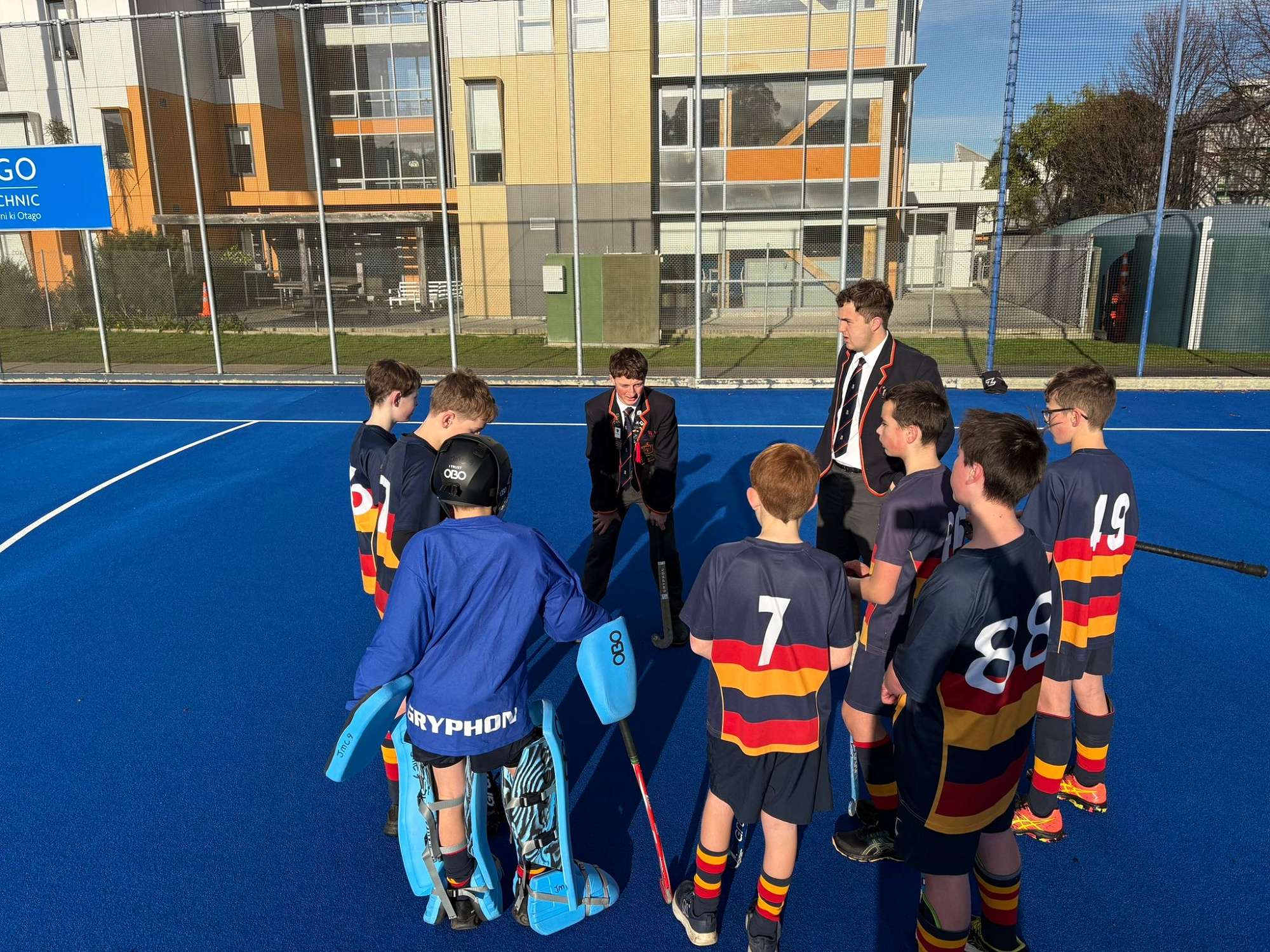
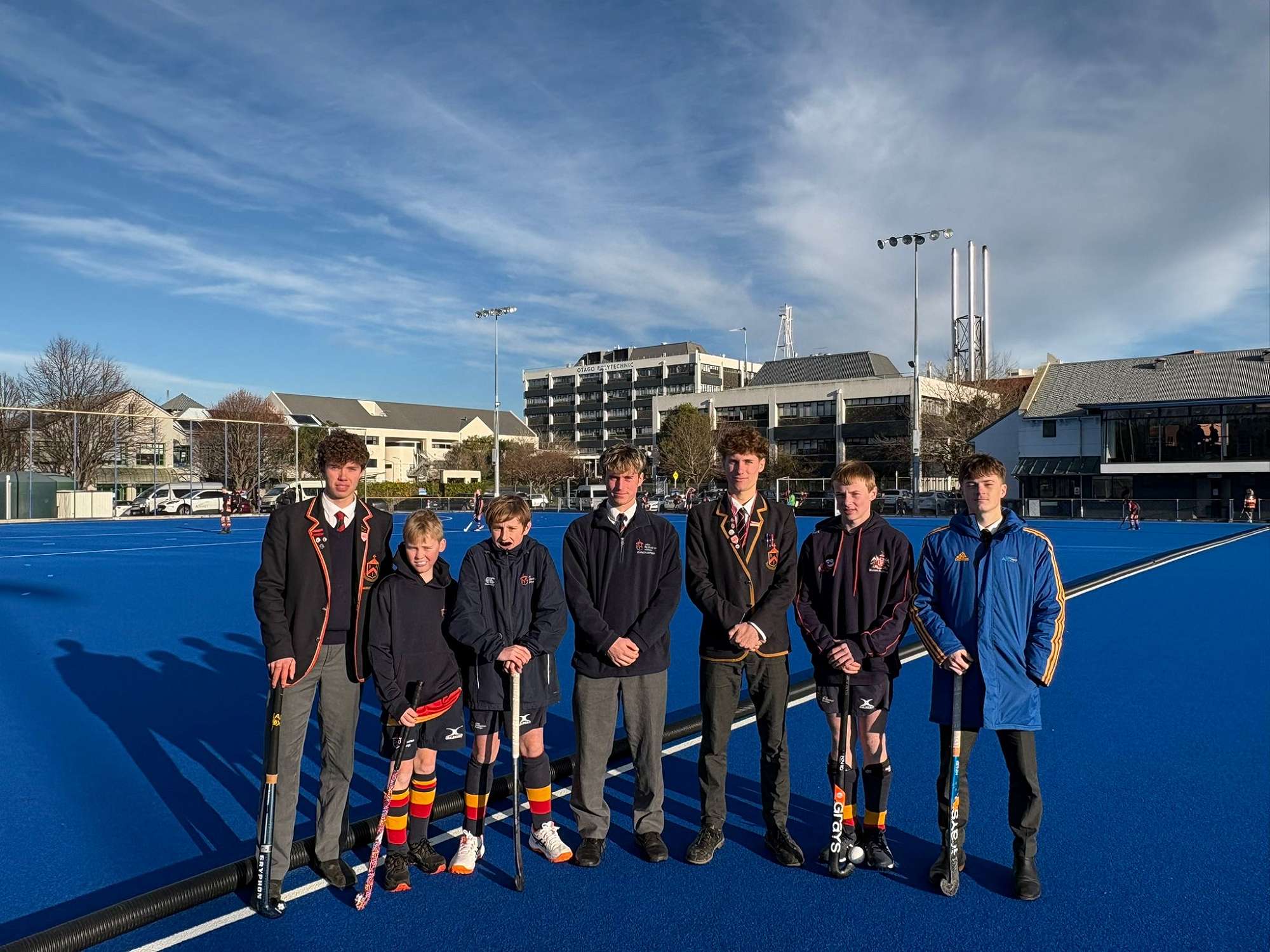
I started my rounds at the hockey turf on Wednesday. At half-time, I made my way over to the Year 8 team and heard Charlie F and Lauchlan M (both Year 13s and members of the First XI hockey team) give the boys feedback on their first half performance. I was impressed by their manner and supportive tone, and the expertise and experience they were imparting. They upheld the mana of the boys, but also made clear to them what they needed to do to pull the score back in the second half. They had the attention and respect of the boys gathered around them in the moment. I couldn’t help but think of how they were enhancing in the boys a clear sense of who we are and what we value; powerful stuff.
I tell the seniors that the junior and middle school students are watching everything they do, the good and the not so good. It’s warming to see how our senior students respond to this and ensure they are the best version of themselves in these moments.
One of the drawcards for me in coming to John McGlashan was that we have students from Years 7-13. The power to positively influence boys and realise our vision for them is enhanced by having many of them in our school for seven years. This has been a focus since 1918. I value that continuity, and enjoy the energy and presence the Year 7s and 8s bring to our campus. I also enjoy the influx of energy in Year 9 when a new cohort is formed with the arrival of boarders and new day students.
We’re in the midst of meeting prospective students and families for the 2027 Year 7 intake. I’m grateful to our Junior School Dean, Lisa Matheson, who leads the tours. I make an appearance at the tail end of these, meeting outside the ELC, under the new Nurturing Character since 1918 sign. Here, I talk about what the phrase means and how it is underpinned by our values, connecting us to our past, including that morning in February 1918.
Dr Aaron Columbus
Principal | Tumuaki
 Open Event Registration - Interested in enrolling?
 Employment opportunities - click if you're interested in working at McGlashan.