

In his book, Tribe: On Homecoming and Belonging, Sebastian Junger argues that human beings are wired for connection to a community. True belonging, he posits, comes via shared struggles, equality, and a purpose larger than the individual. Junger suggests these elements have become lost in our modern and affluent society.
Junger talks about the European colonisation of North America and how thousands of settlers crossed over to live a tribal life with native American communities. Junger argues that settlers were rejecting a stratified Western society in favour of a tribal sense of belonging that valued them as individuals who contributed to something bigger than themselves. As Junger states, the ‘beauty and the tragedy of the modern world is that it eliminates many situations that require people to demonstrate a commitment to the collective good.’ We talk about this with the boys, the idea that we want them to be their authentic selves and how that co-exists with the ‘collective good’ and whakapapa of our college.
“Human beings need three basic things in order to be content: they need to feel competent at what they do; they need to feel authentic in their lives; and they need to feel connected to others. These values are considered "intrinsic" to human happiness and far outweigh "extrinsic" values such as beauty, money and status.”
This quote in the book resonated with me when I thought about how this relates to key aspects of our mission at John McGlashan. We show kindness and empathy. We build belonging and use our strengths for the benefit of others. We are respectful and humble, carry ourselves with mana and lead with empathy. These behaviours are lived via our values of Respect and Manaakitanga.
I see these feelings of competence, authenticity, and connection manifest when the boys take up the myriad opportunities at the college, whether it be in the arts, cultural, or sporting spheres. My hope is that they stretch across all of those during their time with us. This contributes to wellbeing and notions of belonging, and supports our young people to thrive. We’ve been focused on the rounded experience since 1918. Nothing has changed there.
We’re in the process of meeting Year 8s, who are considering joining our community as boarding students in Year 9, 2027. When I ask them why they are thinking about coming to John McGlashan College, the most common answer they give is about the opportunities they know they will encounter. In my short time at the college, I have been heartened by the ways our young people take up the opportunities and lean into the associated challenges. I certainly saw students enacting this across the fields, courts, and the Hall of Memories, at Waitaki Boys’ High School on Wednesday, when they hosted us for the inaugural winter exchange.
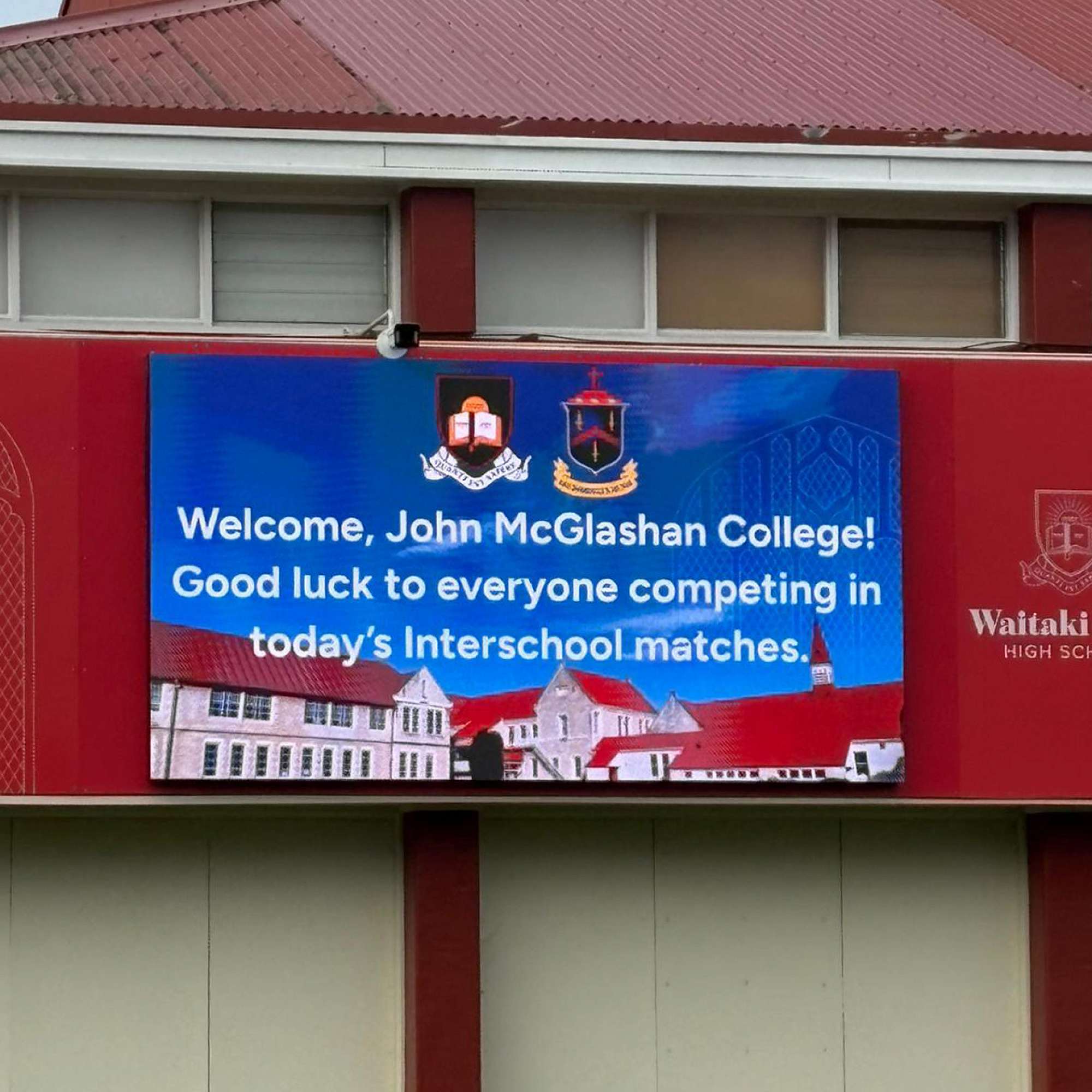
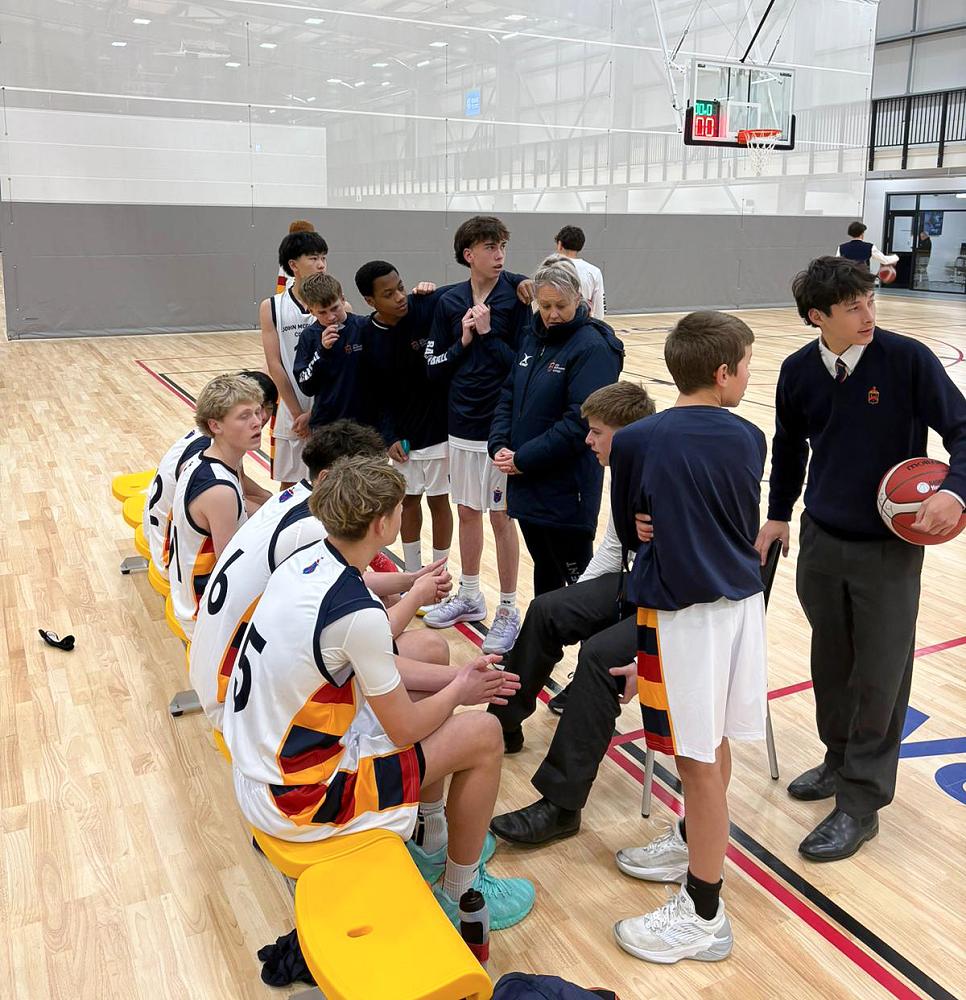
I was lucky enough to travel to North Otago for the day and busily bounced around the different games and competitions: basketball, chess, debating, hockey, football, rugby, and trap shooting. While I enjoyed seeing our boys compete, it was warming to see the ways they connected with each other across the day. For example, my first stop was the junior basketball game. The entire senior team were in attendance, positively encouraging the younger boys from the sideline, and as you can see in the header image, Otis in Year 13 giving the boys a pep talk before the game tipped off.
I arrived at the 1st XI Football match to see members of the 1st XV Rugby team watching and cheering their peers on. They then moved on to the U14 rugby game and cheered the younger boys on enthusiastically. I returned to the courts to watch the senior basketballers and ended up transporting junior basketball players back to the main fields because they wanted to support their friends playing in the junior football match. Likewise, when I visited the Hall of Memories to see our senior debaters in action, the junior boys were there supporting them. This is the authenticity and connection to others that Junger talks about. The boys positively seek this out, as evidenced across the exchange. It enriched the experience for them of the day, but in equal measure, the shared element brought to life the connection to something bigger than themselves.
Before leaving, I passed through the main reception building and stumbled across one of our First XI football players with his dad, who had travelled to support the team. Luke’s dad had been a student at Waitaki Boys’ High School in the 1990s, and had notably been the Head Prefect. He was proudly showing Luke his name on the Head Prefect board. This was an authentic connection being passed across time and between places.
Sebastian Junger concludes that if you want to ‘make a society work, then you don’t keep underscoring the places where you’re different; you underscore your shared humanity.’ On a global level, this has obvious resonance, but it has resonance for a school context. It’s here that our young people practise and develop authenticity, and seek and foster connection, with a focus on shared experiences and culture. This played out at Showquest two weeks back, across the Waitaki exchange on Wednesday, and I see it in the daily interactions at school.
He hono tangata e kore e motu; ka pa he taura waka e motu
Unlike a canoe rope, a human bond cannot be severed
Dr. Aaron Columbus
Principal | Tumuaki
 Open Event Registration - Interested in enrolling?
 Employment opportunities - click if you're interested in working at McGlashan.