
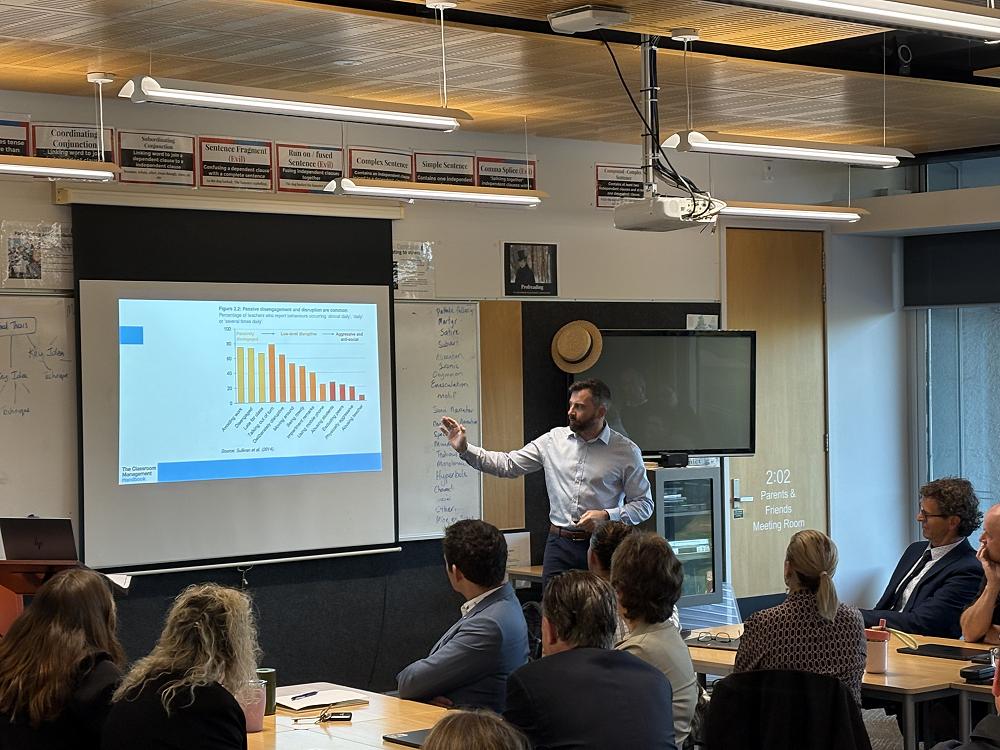
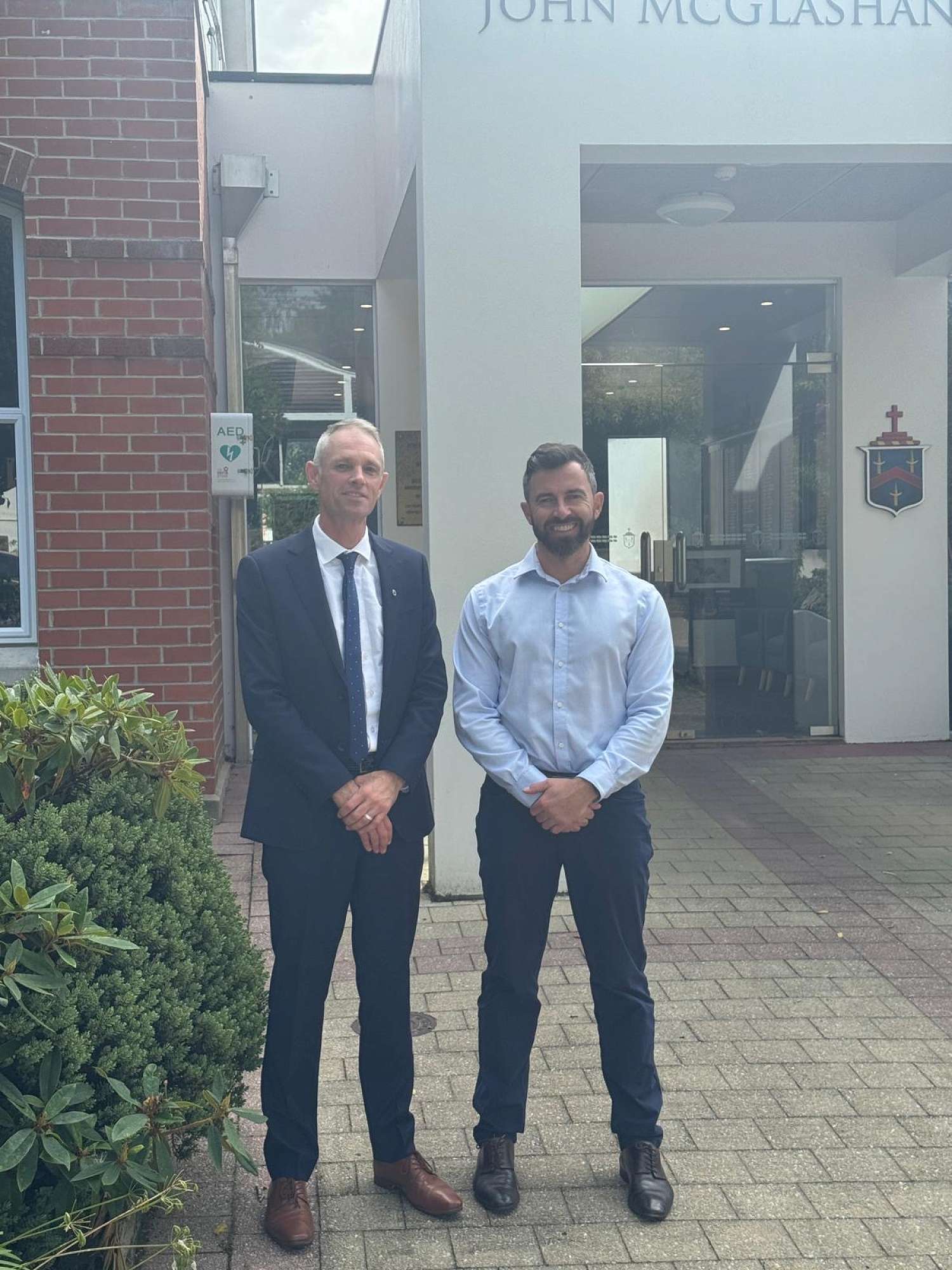
My good friend Mark Dowley visited us at school this week. Mark was at John McGlashan to work with our teachers on the fundamental principles and effective techniques of behaviour management. While the Doug Lemov work we have been engaging with aims to maximise thinking, make learning visible, and ensure a high participation ratio, the bedrock required for this is a calm, settled, and attentive classroom. Mark said this in answer to a question about his top three tips for classroom management.
First, treat behaviour as a curriculum. Just like literacy or numeracy, it needs to be explicitly taught. Second, students need to feel they belong - they need to know you see them, that you believe in them. That connection is the foundation of influence. And third, have a clear set of tools and routines for common interactions. Don’t rely on improvisation - have a game plan. (Teacher’s Institute Q & A, June 2025)
Alongside a focus on strengthening classroom practices that are consistent, culturally sustaining, and warm and demanding, we’re working with staff to create an environment where student behaviour reflects the school values. We do this by reinforcing positive behaviours and embedding values into our behaviour systems. As with the classroom practices mahi, we’re keen to create a greater degree of consistency from classroom to classroom in our approaches to behaviour management. Here, we also talk about the collective and shared responsibility, the idea that what I do in my classroom has an impact on what happens in yours.
Mark argues against the notion that teaching is an innate skill. Rather, teaching, ‘like any other skill, can be taught and practised so all teachers can move towards mastery.’ This brings about ‘engaged, productive classrooms where our students can thrive.’ At the heart of his approach are routines, which, as Mark explains, set the tone for behaviour, protect and maximise learning time, and build a positive culture. Mark is right when he says that when behaviour is predictable, our learners thrive.
Mark teaches at Brighton Grammar in Melbourne and is Associate Head of the Crowther Centre, their research institute, which they have positioned to power their school’s improvement. I have been working with Mark since 2023, when we met at the International Boys’ Schools Coalition Annual Conference. He is a highly respected and renowned educator and is the co-author of The Classroom Management Handbook: A Practical Blueprint for Engagement and Behaviour. The book, co-authored with Ollie Lovell, has been an incredible success. Mark has stepped away from the Crowther this year to focus on working with schools in Australia and New Zealand, and is due to travel to the UK in May.
The ‘greenlight’ moment for Mark around learning behaviour management was when he realised that ‘behaviour is a curriculum’, so you need to ‘treat it as such’. In an interview on the Knowledge for Teachers Podcast, he reflected on his early thinking that he was just a Mathematics, PE, and Science teacher. When he realised that he had to teach behaviour too, the ‘huge penny dropped’ for him. ‘Oh, I have to teach them (students) how to enter the room properly.’ ‘I have to teach them how to pay attention.’ This was a game-changer for Mark, the dawning realisation that behaviour is a ‘curriculum’ he had to teach along with subject-knowledge. This shifted his focus, as he reflected on his previous assumptions that students should know this - e.g. how to enter a room so they are ready to learn and engaged from the get-go - but ‘they don’t, so ‘I need to teach it.’
Mark set down these ten principles to guide our collective approach to classroom management:
Identify factors influencing each student’s behaviour.
Build and practise effective management routines.
Set firm behavioural standards from day one.
Stay calm and consistent in your emotions and actions.
Plan and model behaviour just like academic content.
Take note of your tone, posture, and non-verbal signals.
Break tasks into steps and check for understanding to foster success.
Observe and learn from high-performing teachers.
Create an environment of support, trust and belonging.
Actively build positive relationships through praise.
As Mark explained to our staff during the morning session on Wednesday, personal relationships are central to classroom management, alongside restorative practices, which together help maintain positive relationships with students. Clear expectations and routines are crucial, while strategies should be practical and actionable. School-wide and within-classroom consistency creates a positive culture. To maintain this, Mark recommends regularly revisiting expectations of behaviours. This is essential work for us, as well-managed classrooms lead to academic success and improved wellbeing for students and teachers.
Our discussions with Mark centered on several of the practial and evidence-informed strategies he presents in his book - a strong start to the lesson based around an established entry routine; how to best defuse debate with a student; using positive narration to highlight desired behaviours; and ensuring tight transitions between phases of the lesson so that learning time is maximised.
Following the full-staff session in the morning, our Learning Area Leaders and Deans met with Mark for a working lunch. The cogs of middle leadership are central to embedding initiatives related to the classroom, as middle leaders are closest to implementation. Mark talked to the group about how to support teachers in living the principles of effective classroom management and embedding the strategies we learned about earlier in the day. While middle leaders play a key role, so too does the Strategic Leadership Team, as we establish and strengthen school-wide systems and structures. To that end, Mark’s visit was rounded out with an SLT session.
Much the same as our use of Doug Lemov’s work, creating a degree of consistency and predictability to the way that we manage behaviour creates the space for teacher autonomy. Schools need to define their preferred behaviour management practices and lean on their values to support that. We’re grateful for Mark’s energy and expertise in resetting our approach to classroom management. We now set about embedding the mahi and ensuring that our young people have calm, settled, and productive classrooms. In a Q & A with the Teacher’s Institute in Auckland, Mark shared his view that school improvement isn’t about ‘chasing shiny initiatives’. Rather, he argues, it's about doing ‘a few things really well, over time, and making sure that every student gets access to high-quality teaching in a school culture where they feel like they belong.’ I couldn’t agree more.
Dr Aaron Columbus
Principal | Tumuaki
 Open Event Registration - Interested in enrolling?
 Employment opportunities - click if you're interested in working at McGlashan.