
As a teacher of Mathematics, I believe we are entering a period of exciting and challenging times in how we teach and assess mathematics.
The recent and upcoming changes in the curriculum, alongside the commitment to an hour of daily instruction, confirm a shift in philosophy. We aim to establish a crucial balance: ensuring students master the fundamental processes while also preparing them to be resourceful, mathematical thinkers for life beyond school.
Our goal is not to produce robotic calculators. While explicit teaching of core skills is vital our students must know their fundamental processes. We must never allow maths to become a sanitised set of skills taught and assessed in isolation. Our focus in the JMC plan moving forward will be challenge, success, and fun. We will actively grow mathematical thought, logic and reasoning, structure, and communication. Importantly, we will encourage creativity in solutions.
Why is this creativity so essential? The ability to experiment and think in unconventional ways is the key to true problem-solving. A great example I use in class is the U2 Bridge Question (a classic brain teaser, feel free to try it!). Often, the student who solves it quickly isn't the one who regularly tops the class tests. They're good at maths, yes, but they succeed because they think creatively, seeing a non-obvious, efficient path through the problem. This demonstrates that pure assessment focus, while important for examination success, can sometimes undermine the deeper learning process and the motivation that comes through genuine discovery.
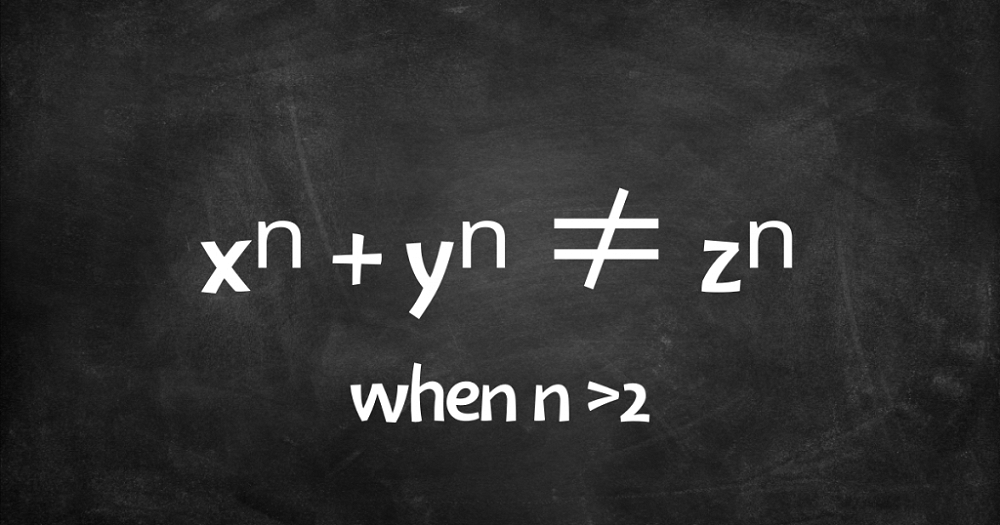
For a historical example of this blend of skill, tenacity, and creative thought, we need look no further than the recent anniversary of the solving of Fermat’s Last Theorem by Sir Andrew Wiles.
For over 350 years, this problem defied mathematicians, not because it required brute-force calculation, but because its simple statement required deep conceptual insight and the development of entirely new fields of mathematics. Wiles' solution demanded not only immense knowledge and creativity but also extreme levels of personal drive and tenacity. This is pure mathematics—the pursuit of knowledge for its own sake—and it demonstrates the immense value of problem-solving and the ability to experiment.
We are working hard to broaden student knowledge through fun competitions, investigations, and research projects. We want to ensure students clearly see the usefulness of maths. In fact, the question, "When am I ever going to use this?" seems to be gradually disappearing from our students' vocabulary, as they increasingly understand the vital importance of mathematics in various industries, from coding and engineering to finance and data analysis.
While change is never automatically good, the continually evolving world requires us to continually evolve. In this case, the changing curriculum is viewed as an opportunity—an opportunity to improve our delivery and ensure every student is prepared not just to calculate, but to think.
We look forward to an era of mathematical growth, marked by logical rigour and imaginative breakthroughs. I believe these are truly exciting and challenging times ahead!
 Open Event Registration - Interested in enrolling?
 Employment opportunities - click if you're interested in working at McGlashan.