
Remember when you were at school and your class was learning about something that sparked your interest?
For many of us, it would have been in Junior Social Studies, or Senior History, Geography or Economics.
It might have been exposure to interwar Germany and the rise of Hitler, hearing about the Dawn Raids, seeing volcanic eruptions, or learning about market trends or international trade. In the Social Sciences, we are passionate about human behaviour, society and relationships and inspiring our rangatahi to build their critical thinking and evaluative skills. While it may appear that our curriculum is in a period of flux, the passion we have for our subjects remains constant.
What are the Social Sciences I hear you ask? The subjects that focus on human behaviour, society and relationships. At McGlashan, Year 7 - 9 Integrated Studies, Year 10 Social Studies, and Senior History and Geography all come under the Social Sciences umbrella.
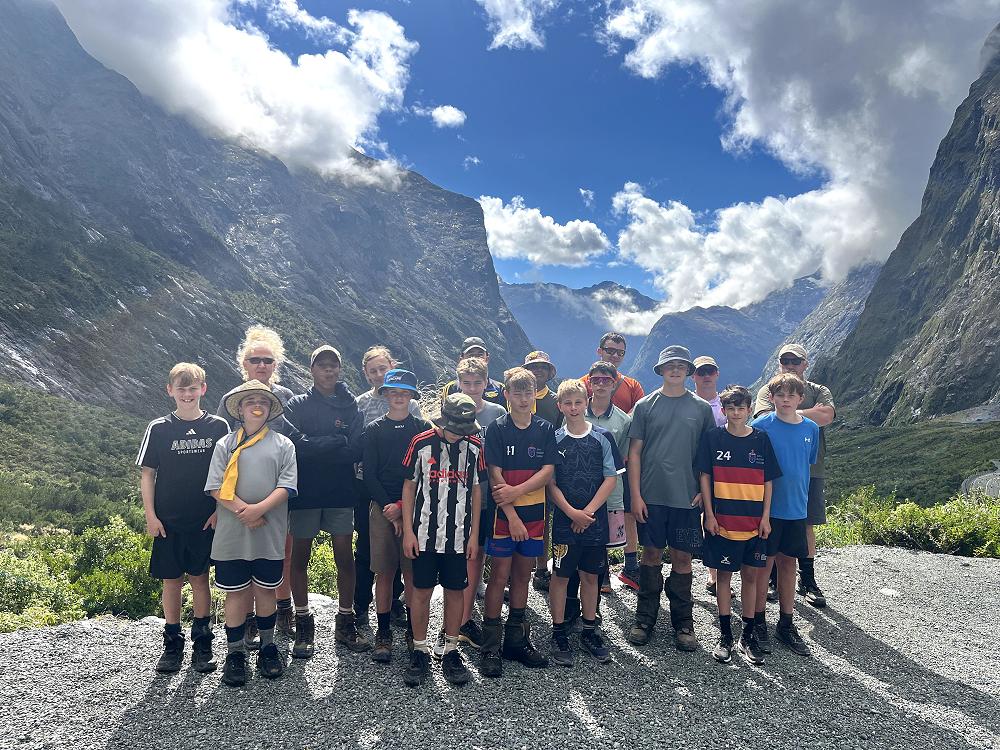
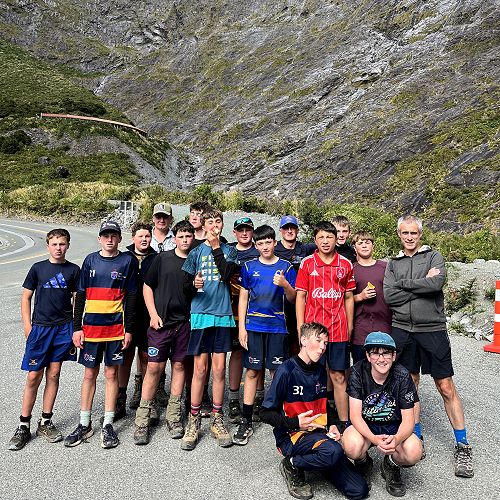
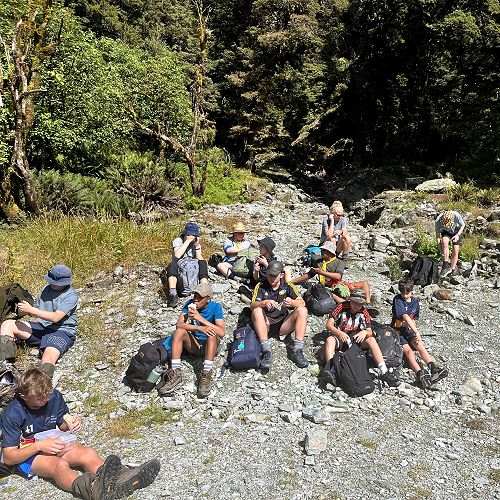
As part of the start-up programme for the Year 9 students, they jumped straight into learning more about the history of Fiordland, where Te Kūwaha Mātauraka (our second campus) is found. They experienced the environment and were able to discover more about the hardships of building the Milford Road and Homer Tunnel, the impact of weather on the Fiordland environment, and how this led to the destruction of the Lake Howden Hut and just why, according to legend, there are so many darn sandflies. Now, as we settle into the classroom after weeks of adventuring, we are investigating the big questions of who came to New Zealand, why they come and who we are now, as a country.
Currently in Senior Geography, students have started the year by building key skills such as mapping, direction, latitude, and longitude. These foundations help students understand and investigate how natural and human processes shape our world.
Year 11 students have applied these skills to fluvial and glacial processes, exploring how rivers and glaciers shape landscapes over time. Next week, they will take their learning into the field on a Level 1 camp in Te Anau, conducting primary research on the braided Eglinton River. Students will measure, observe, and analyse environmental data in a hands-on setting, developing practical skills that directly support their first internal assessment, Using Data to Understand an Environment. We are fortunate to have Mr Palmer and Mr Avis guiding the students as they work in this dynamic river environment.
Year 12 students recently spent a three-day camp based in Twizel, exploring Aoraki / Mount Cook National Park. The focus was researching vegetation zonation along an alpine gradient on the Red Tarns Track. Students experienced firsthand how plant height and species diversity change with altitude, and are now graphing and analysing their data to uncover patterns for their first internal assessment. The camp challenged students physically and intellectually, giving them a real appreciation of the alpine environment and the processes that shape it.
Year 13 students are focusing on the importance of planning, a key area for geographers who go on to work in local and regional councils. Their first internal assessment evaluates planning before, during, and after a major event, using Rhythm and Alps in Wānaka as a case study. Students have been investigating everything from environmental impacts and infrastructure to health, safety, and waste management. The boys are highly engaged, and many will attend the festival themselves later this year, gaining a practical understanding of the organisation required to run a safe and successful event.
Across all levels, Geography encourages students to think critically, make connections between theory and real environments, and develop skills that extend well beyond the classroom. We look forward to another year of exploration, discovery, and growth in geographic thinking.
In History, in Year 12 we started the year by learning about the moral panic in 1950s New Zealand around juvenile delinquency. The Year 11 class made their own countries and wrote their own constitutions as part of our Black Civil Rights unit, in preparation for studying how legal challenges to segregation worked. In Year 13, we have been investigating New Zealand’s eugenic history and how it impacted people’s lives.
Students are now beginning their own research into their individual areas of interest. We have students researching a wide range of social, political and military histories including: the Napoleonic Wars, The Ngāi Tahu claim, or Te Kerēme, the capture and trial of Adolf Eichmann, the Nazi invasion of the Soviet Union, the legacies of David Lange and Robert Muldoon, the Korean War, the Iraq War, the Chinese Civil War, and the Wall Street Crash and Great Depression. It is heartening to see our students taking an interest in the world around them, in causes and consequences of different events, and in various perspectives.
Historical concepts such as change and continuity, cause and effect, perspectives, bias and reliability and the skills of evaluation of evidence will stand them in good stead as they prepare for life outside of school and tertiary education.
 Open Event Registration - Interested in enrolling?
 Employment opportunities - click if you're interested in working at McGlashan.