
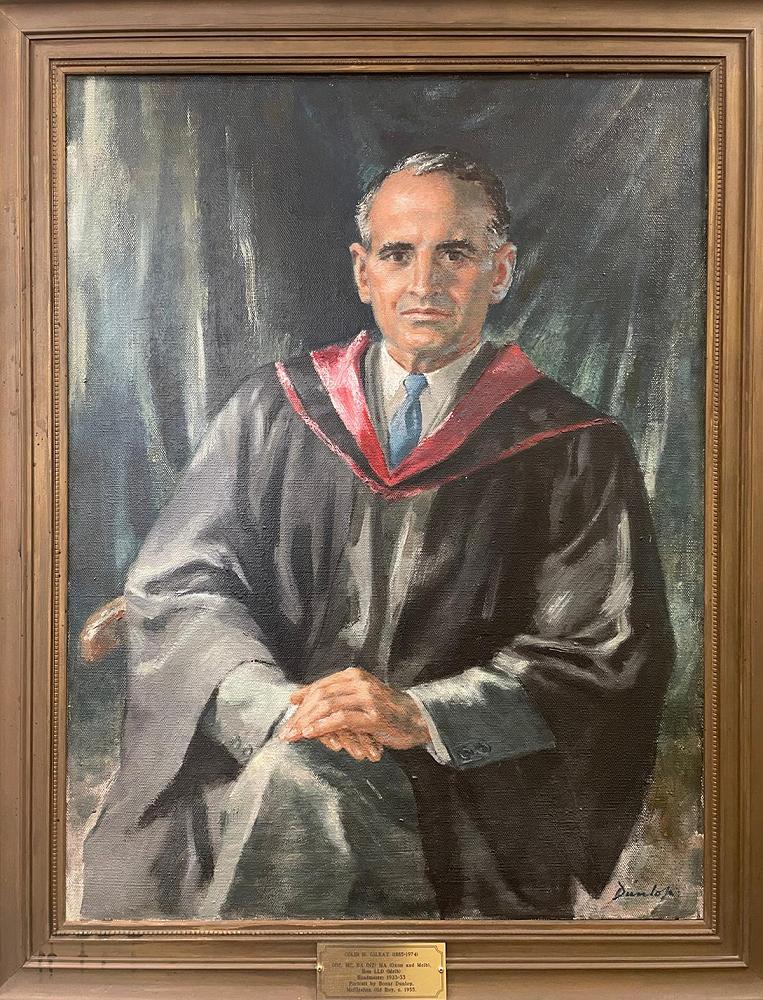
Colin Gilray was our second Headmaster (1923-1934) and was known for his energy, enthusiasm, and principles. He was a gifted teacher and targeted academic standards, challenging students to work hard and think hard. He set high standards for his staff, wanting ‘teachers who are students, always becoming better fitted for their tasks.’ Gilray fostered a spiritual influence through his example to others and left an ‘indelible legacy’ at our college. He is recognised as one of the leading principals to serve in New Zealand.
Gilray immigrated to New Zealand from Scotland in 1890. He graduated from Otago University with a BA in 1907 and was awarded a Rhodes Scholarship to Oxford University in England. He taught and practised law, and played international rugby. Gilray served as an officer on the Western Front during the First World War. He began his headship at John McGlashan in 1923, leaving us in 1934 to take up the position of Headmaster at the Scotch College in Melbourne. He held this position until his retirement in 1953, and is viewed by Scotch as a key leader in their school’s history.
The Scotch chaplain read the eulogy at the memorial service to mark his passing in July 1974. He described Gilray as shy, humorous, perceptive, strong, kind and friendly; a humble man of quiet effectiveness; a person of sound judgement, high principles, and deep faith in God. A mark of his character and commitment is seen in the letters he faithfully wrote to the families of every Scotch boy killed in World War II. In 1951, he was awarded an O.B.E. The reference in the eulogy to his time at John McGlashan College simply states that he ‘contributed notably to its upbuilding.’
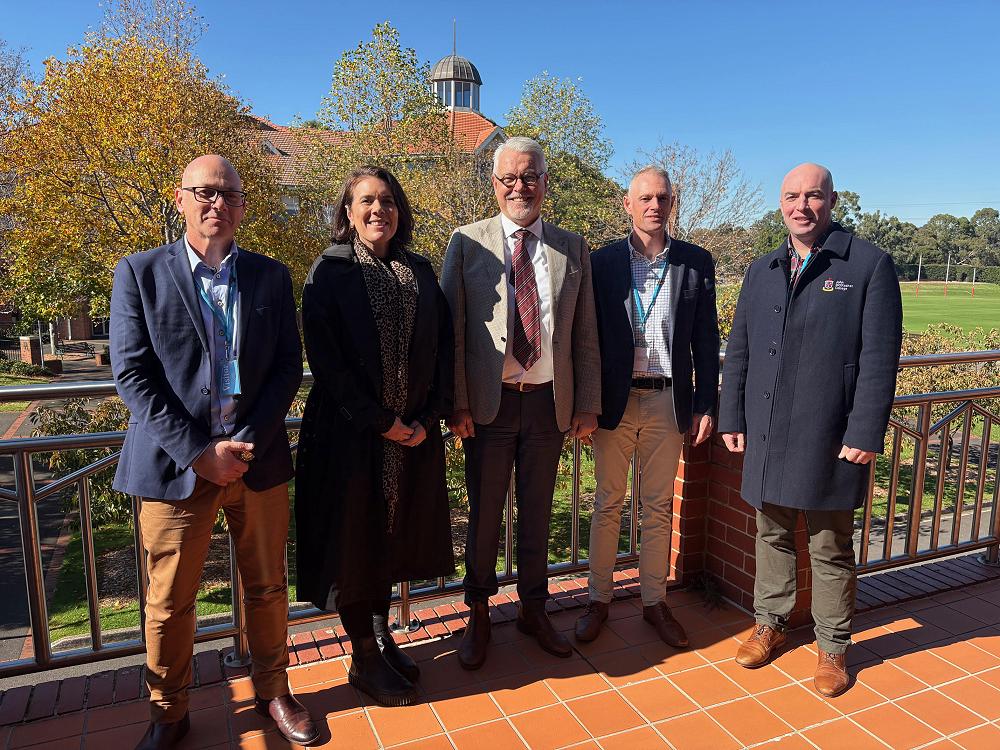
Colin Gilray connects our college to Scotch College. I have been lucky enough to visit the school on three occasions, most recently on Monday, when we were in Melbourne visiting three of Victoria’s high-performing schools. Kirstyn Sandall (General Manager), Drew Campbell (Director of Boarding), and Nigel Hunter (Deputy Principal) joined me on this research trip. We also visited Haileybury and Melbourne Girls’ Grammar.
After spending time with our SLT counterparts at Scotch, attending assembly, visiting their boarding house, and hearing about the myriad priorities of their change journey, we met with the Headmaster, Scott Marsh, the tenth Headmaster of a school established in 1851. Together, we were appreciative of being in the privileged position of bringing our two schools together and strengthening that thread of our shared whakapapa.
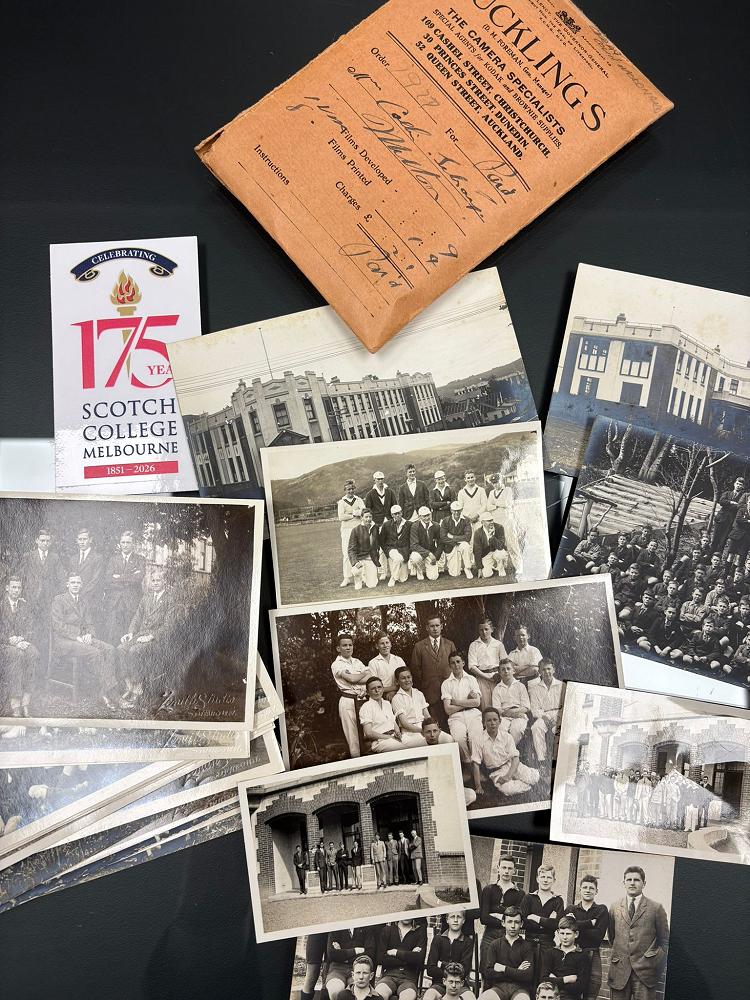
Before leaving, we stopped by the archives to collect photos of John McGlashan College that had recently been donated by a member of the Gilray family, photos that Gilray must have taken with him to Australia.
Colleagues in schools around the world are doing important, innovative, and impactful work. Going to the well is how we think about these school visits. We can’t exist in a bubble if we’re to ensure transformative experiences and opportunities for our young people at McGlashan. We go to where the good practices and people driving those practices are, and we bring them back to our school. Some we can put to the side, as they don’t fit our context, while others can be adapted and implemented. The connections made grow our professional networks and create a sustainable way to draw on and share ideas and initiatives.
When we return to school, though, we need a vehicle by which to process the ideas and learning we are exposed to. This sits alongside somewhere to develop new and enhance existing activities that support our staff to grow and thrive.
To that end, at the beginning of the year, we quietly established the Gilray Institute. This is our centre for professional learning and educational research. Given the legacy and character of Colin Gilray, it seemed obvious for us to give his name to the centre. It exists to inquire into teaching, learning, and leadership within the John McGlashan context, using research to inform practice and drive improvement.
The Gilray Institute has three core purposes:
Conduct and engage with research: We draw on research while undertaking our own projects grounded in the lived experience of our classrooms and school community.
Translate research into practice: Research findings are transformed into meaningful professional learning and practical strategies that strengthen teaching, learning, and leadership.
Contribute to the wider community: We share insights, collaborate, and contribute to professional conversations beyond our school.
Taking this intentional approach means that we are research-invested, where teachers consume and apply expert knowledge and generate new knowledge. This benefits the experience and outcomes of our learners and supports the development of teachers. It builds a culture where inquiry, reflection, and evidence-informed practice are the norm. As we go forward, it will be the activities of the Gilray Institute that power our school’s improvement.
Dr. Aaron Columbus
Principal | Tumuaki
 Open Event Registration - Interested in enrolling?
 Employment opportunities - click if you're interested in working at McGlashan.